
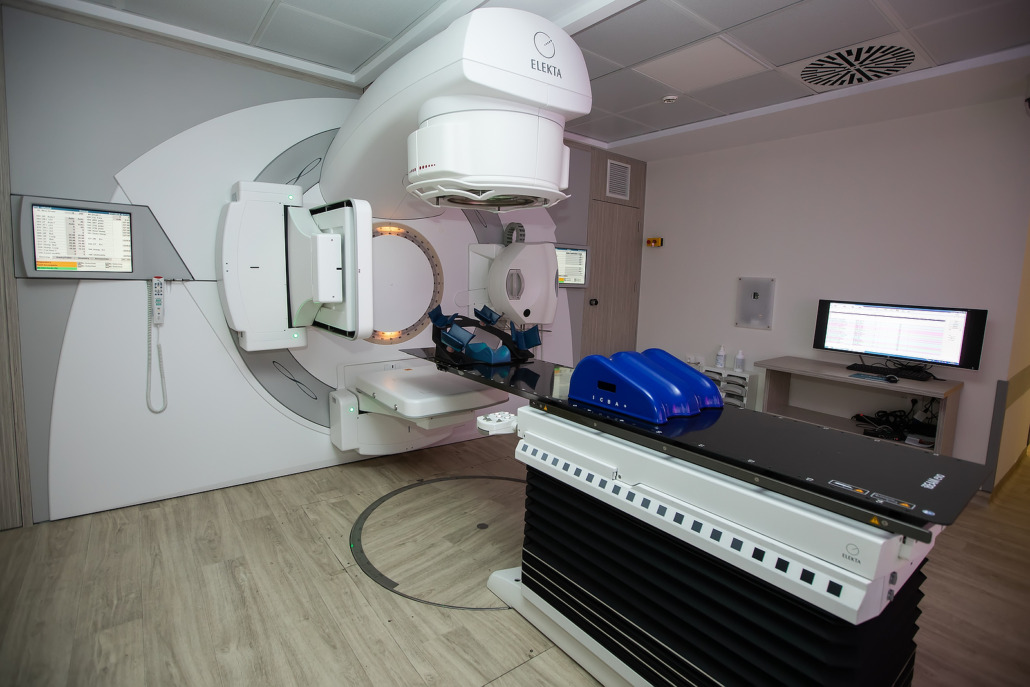
What Does LINAC-Based Radiotherapy Treatment Involve?
If you have been diagnosed with cancer and need radiotherapy treatment, there are various kinds you may receive, including internal and external radiotherapy and, in the latter case, different means of delivering it.
Depending on the type of radiotherapy you receive, you may become very familiar with a linear accelerator (LINAC) machine.
To understand what this is and what is involved, let us first consider the different kinds of radiotherapy:
- Internal radiotherapy involves the injection of a radioactive substance into the body or your blood stream, enabling it to migrate to the location where it can deliver the radiation needed to disrupt the DNA of cancer cells
- External beam radiotherapy involves beams of invisible radiation being directed to the body, aimed at the area or areas where the cancer resides
- Stereotactic radiotherapy involves the use of precise beams of more intense radiation aimed at very specific locations, usually where the cancer is in or adjacent to sensitive organs like the brain. This sometimes involves a Gamma Knife instead of a LINAC machine.
- Intensity-Modulated Radiation therapy is a form of radiotherapy delivered through a LINAC machine. It uses modulated beams shaped to the tumour and for different clinical scenarios than stereotactic treatments.
What Exactly Are LINAC Machines?
LINAC machines are large and complex devices that work by using a heated filament to effectively boil off electrons, which an accelerator then directs through further pieces of high-tech equipment, but the ultimate principle is simple.
These machines have been in use for decades. The concept was first proposed by physicist Gustav Ising in 1924, with the idea being modified. However, it wasn’t until 1953 that the first one, located in London, was used to treat patients.
What Cancers Do LINAC Machines Help To Treat?
Many primary cancers are commonly treated using a LINAC machine. These include:
- Head and neck cancer
- Brain and spine cancer
- Breast cancer
- Lung cancer
- Prostate cancer
- Blood cancer
- Cancers of the reproductive systems, such as the womb, cervix or prostate
- Cancers of the digestive system, such as the stomach, pancreas and liver
- Colon and rectal cancers
- Bladder cancer
In addition to these, it can also be used to treat metastatic (secondary) cancer that has spread from its original area to other parts of the body.
How Many Cancer Patients Are Treated With LINAC Machines?
This is a very wide range of cancers and highlights not just how broad a range of conditions the LINAC machine is equipped to treat, but also highlights how likely it is that any given cancer patient will, if prescribed radiotherapy, be given treatment in this machine. Over half of all cancer patients will have experienced this.
The experience of treatment in a LINAC machine will, at least the first time, be a novel one. The patient lies on a table, which is designed to be comfortable to recline on, before they slide backwards into the machine and lie still while the course of radiotherapy is delivered.
For some, this does bring the challenge of claustrophobia, although the patient will be able to stay calm as they can listen to soothing music. It is also possible to communicate with staff outside using an intercom.
What Is The Experience Of Radiotherapy Delivered By A LINAC Machine?
The session will last between ten to 30 minutes, depending on the cancer being treated, what stage you are at in the treatment course and individual factors.
While LINAC machines are used very widely, we will still ensure your treatment using one will be tailored specifically to your needs.
As with any radiotherapy treatment, you will be likely to experience some side effects due to the radiation, although the precision of the treatment will limit the exposure to healthy tissue. These commonly include:
- Fatigue
- Skin Soreness
- Nausea
- Hair loss
Most side effects are temporary and will ease once your course of treatment ends. For example, if you have lost your hair, you will find that it soon starts to grow back again.
If you undergo radiotherapy treatment with us involving a LINAC machine, you can be assured that you will receive tailored personal treatment and excellent aftercare, as well as being kept informed of how everything is progressing throughout the process.
Learn more about our advanced radiotherapy treatments for different cancers on the Amethyst Group website.
