
What Can Be Learned from Brain Tumour Awareness Month?
There are many themed months connected to various topics of importance or interest, but when it comes to issues of cancer medicine, March is all about raising awareness of brain cancer.
Brain Tumour Awareness Month will do just that and will serve a very important purpose, for this is a kind of cancer not always talked about a lot, with plenty of terminology that a lay person may be confused by.
In addition, not everyone knows about the symptoms that could be used to produce an early diagnosis, or the forms of treatment on offer, such as Gamma Knife surgery.
What Are The Different Kinds Of Brain Tumour?
The first thing to be aware of with brain tumours is the basic distinction between primary and secondary tumours. A primary tumour means that it is the original cancer and is located where it started.
In the case of a secondary tumour, this arises from cancer that started elsewhere in the body and subsequently went through a process called metastasis, where cancer cells spread beyond their original location through the bloodstream or the lymph nodes.
There are also some different kinds of brain tumour, defined by the location and where they began. There are over 100 different types, but many of these are very rare. Common forms include meningiomas, which start in the meninges, the tissues that surround the brain.
Gliomas, starting in the glial cells in the brain and spinal cord, are the most common primary malignant brain tumours, although meningiomas are the most common primary brain tumour overall.
- Glioblastomas, which are the most common glioma and are very aggressive and fast-growing
- Astrocytomas, which arise in star-shaped cells called astrocytes and are caused by a mutation in the IDH1 or IDH2 genes
- Oligodendrogliomas, which are rare and slow-growing tumours arising from the Oligodendrocyte cells
Tumours are also classed on a grading system of 1-4, based on how aggressive they are, with Grade 1 being the slowest growth and Grade 4 being the fastest. For example:
- Glioblastomas are grade 4 tumours
- Astrocytomas can be grade 2,3 or 4
- Oligodendrogliomas are usually a slow-growing grade 2, but sometimes can be grade 3, a subtype known as anaplastic oligodendroglioma
What Signs Can Help To Diagnose A Brain Tumour?
Whatever grade a tumour is, the best patient outcomes – and the widest range of possible treatment options – can be facilitated by early diagnosis.
As they grow, tumours can start pressing against the brain or spinal cord, impeding functions. The exact effects may depend on where the tumour is located, as different parts of the brain are associated with specific functions.
Nonetheless, the following may all be signs of a possible brain tumour:
- Headaches
- Seizures
- Nausea and vomiting
- Vision problems such as blurred eyesight
- A weak or numb feeling on one side of the body
- Cognitive or personality changes
- Memory loss
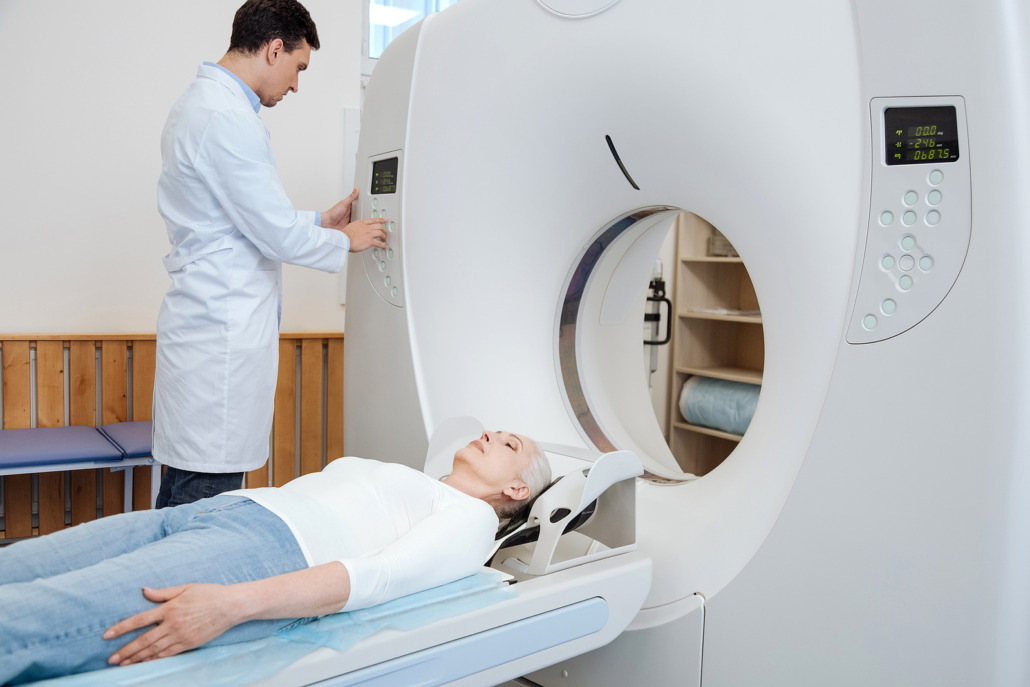
Anyone experiencing one or more of these symptoms should seek medical attention. A CT or MRI scan can reveal if a tumour is present.
What Are The Treatment Options For A Brain Tumour?
If you have been diagnosed with a brain tumour, there are several possible means by which it can be treated:
- Surgery to remove part or all of it
- Chemotherapy
- Radiotherapy
The particular kind of radiotherapy normally used is called stereotactic radiotherapy, which is designed to focus very intense doses of radiation on the affected area with great precision.
It can sometimes be used after a tumour is removed to tackle any remaining cells, a process known as adjuvant radiotherapy.
However, when most, or even all, of the tumour remains in place because its location makes surgical removal impossible, the focus will be on using radiotherapy to shrink the tumour.
What Is Gamma Knife?
This is where Gamma Knife can be a particularly effective device. Invented by Swedish neuroscientist Lars Leksell in the 1960s, it is not a knife in the physical sense, but a device that can project very powerful beams of gamma radiation with high levels of precision.
This has the dual benefit of maximising the radiation dose to the tumour while minimising exposure to surrounding healthy brain tissue, which limits the side effects.
Radiotherapy can be highly effective in shrinking tumours. It works by damaging the DNA of the cancer, which makes it harder to multiply and spread.
This treatment does come with some side effects, which can include hair loss, tiredness, sore skin and nausea. However, many of these will diminish after treatment. For example, your hair will start growing back.
Being diagnosed with a brain tumour can be a major life event. However, increased awareness can be very helpful for patients and their families, partly because it enables earlier diagnosis to take place, but also to help understand what treatments are available.
Learn more about our advanced radiotherapy and neurosurgical treatments for brain tumours on the Amethyst Group website.
