
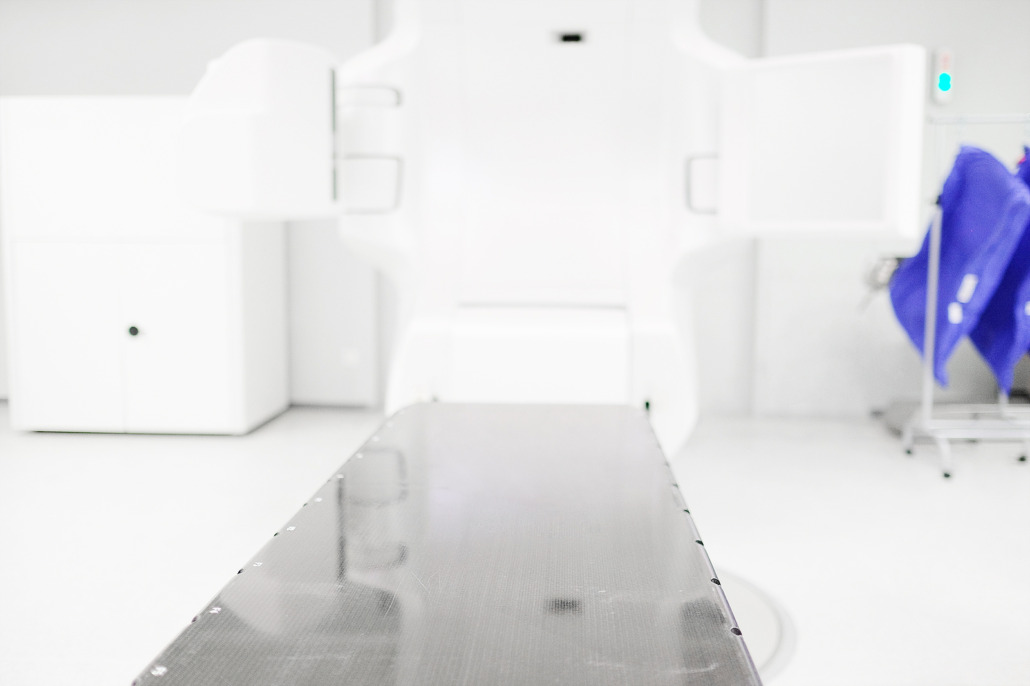
How Has Gamma Knife Treatment Developed Over The Years?
Radiotherapy has been around since the turn of the 20th century, but as our understanding of radiation has improved and the technology for deploying it has developed, so has the capacity to bring about better results for patients.
If you require radiotherapy, there are different kinds you may have depending on your condition. For some, the form used is stereotactic radiotherapy. This involves directing very precise beams of radiation at very small and specific areas, with the purpose of providing the maximum impact on a tumour while minimising exposure to surrounding tissue.
This form of radiotherapy is particularly valuable when the cancer is close to the most important organs, which include the brain. One of the devices through which it can be delivered is Gamma Knife.
What Is Gamma Radiation And Why Is It Used In Radiotherapy?
To understand what Gamma Knife does, it helps to know more about radiation. It comes in four types:
- Alpha particles, which are seldom harmful and not usually useful in radiotherapy, as they cannot penetrate the skin or even objects like clothing or a sheet of paper.
- Beta particles, which can only penetrate part of the way into your skin
- Gamma radiation and X-rays. These can both penetrate the skin as they consist not of particles, but of rays, in the same way light waves or radio waves do.
In the case of X-rays, everyone will be familiar with their use in medical scanning. But gamma rays are more powerful and, apart from their ability to penetrate the body, have a major impact on whatever they encounter. Radiation can destroy cell DNA, which is useful in tackling tumours as it leads to cell death and therefore prevents tumours from growing.
The knowledge of the power of gamma rays led scientists to use them in radiotherapy. But Gamma Knife was a significant step forward.
Despite its name, it isn’t a knife in the normal surgical sense, as there is nothing invasive about its use. After all, it is the property of gamma radiation to penetrate the skin that makes it effective.
Who Invented Gamma Knife?
The device was first devised by the Swedish neurosurgeon Lars Leksell in the 1960s. By 1968, he had the device up and working and he was using it at the Karolinska Hospital in Stockholm.
Using a gamma radiation source and directing the beams with great precision, Prof Leksell was soon using it both to treat brain tumours and also other neurological conditions.
Indeed, even epilepsy and nerve conditions like trigeminal neuralgia can be treated as Gamma Knife can target specific nerve pathways with highly focused radiation, disrupting pain signals without the need for open surgery..
As a result, the lives of many cancer patients have been saved or at least extended, while people suffering from other conditions have enjoyed much relief from them, thanks to Gamma Knife.
A second version of the device emerged in 1974 and its use soon spread beyond Stockholm. The first Gamma Knife to be used in the UK arrived in 1985. Four decades on, it is much more widely used and we have extensive experience of using it for different treatments.
We would be likely to use it if you have a brain tumour in a place that is difficult and/or dangerous to reach and cut out with surgery. However, it may also be used in combination with physical surgery, often being used after the removal of a tumour to prevent it from growing back.
What Other Equipment Is Used To Help Gamma Knife?
It might be expected that any invention from 1968 could be improved upon, but while the device itself has been enhanced to an extent, it is still fundamentally the same thing as it was. However, there are other pieces of technology that can help to make the gamma knife even more effective.
Before and even during radiotherapy, MRI, CT and PET scans are used to help direct the beams of radiation with ever greater precision. Among the benefits of the most modern technology is the ability to do this in 3D, which is especially useful when the beams of gamma radiation are directed from different angles to maximise the impact on a tumour.
If you need stereotactic radiotherapy, you may soon be encountering the Gamma Knife. Like any form of radiotherapy, it will bring some side effects, but the precision of the device and the fact that a course of treatment can be delivered in fewer sessions than other forms of radiotherapy will help to minimise this, as well as ensuring it is over sooner.
A growing number of people have benefited from the use of Gamma Knife over the years, including many of our patients.
Learn more about our advanced Gamma Knife treatments on the Amethyst Group website.
